
 EN
EN

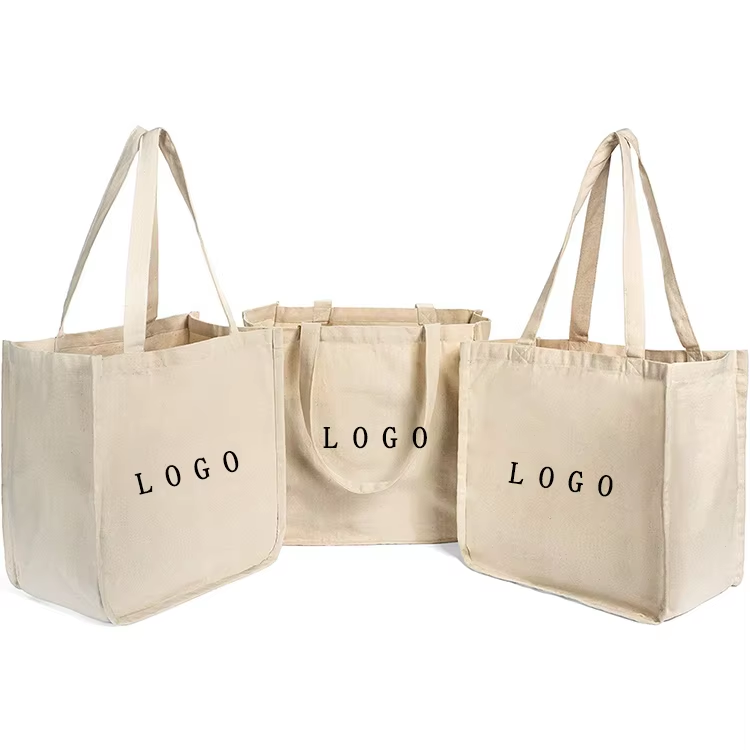
Cotton Canvas Tote Bag GSM Guide: 4–12 oz Tiers for Bulk Buying
Most canvas tote sourcing conversations start with print colours or handle style. They should start with fabric weight. Weight drives unit cost, print behaviour, seam strength and how many uses a bag survives — and it is the one number you cannot fix later without re-quoting the entire job. Cotton canvas for totes is quoted in two units: ounces per square yard (oz/yd²), the convention US buyers grew up with, and grams per square metre (GSM), which most mills use on technical datasheets. This guide maps the five standard tiers, from 4 oz to 12 oz, to the end uses, print methods and handle loads they actually support, so you can lock the right specification before sampling rather than after.
GSM and oz: two units, one fabric
Canvas weight is a mass-per-area figure, not a thickness reading. One ounce per square yard converts to approximately 33.9 GSM, which is why the tiers quoted across the industry — 4, 6, 8, 10 and 12 oz — sit at roughly 140, 200, 270, 340 and 400 GSM. A useful rule of thumb: multiply the oz figure by 34 for a close GSM estimate.
Two tolerances matter when you read a mill's quote. First, finished fabric weight normally carries a ±5% tolerance, and dyeing plus finishing can shift a nominally 340 GSM cloth by 10–20 GSM in either direction. Second, the GSM number on a datasheet is often measured on grey (undyed) fabric, so ask for the finished weight after dyeing. If the physical swatch disagrees with the paperwork, the right response is a measured weight check at the pre-production sample stage, not an argument after bulk shipment.
Verifying a weight yourself is a five-minute job. Cut an exact 10 × 10 cm swatch, weigh it on a laboratory scale, and multiply by 100 to get GSM: a true 340 GSM canvas swatch weighs 3.4 g, and a 2.9 g reading means roughly 8.6 oz fabric presented as 10 oz. Ask for the finished dyed weight, not the grey weight, because dyeing and finishing add mass — typically 1–3% — and the datasheet number can be measured on either.
| Tier (oz/yd²) | Approx. GSM | Typical end use | Print behaviour | Relative cost per unit |
|---|---|---|---|---|
| 4 oz | ~140 GSM | Event giveaways, trade-show giveaways, light promo | Best flat surface for spot screen printing; ink coverage is dense | Lowest cost tier |
| 6 oz | ~200 GSM | Everyday retail totes, grocery carry, mid-range promo | Stable enough for 1–4 colour screens; slight texture shows | Low-to-middle |
| 8 oz | ~270 GSM | Standard retail tote, book bags, branded merch | Firm surface, crisp registration, good embroidery base | Middle |
| 10 oz | ~340 GSM | Heavy shopping, hardware, premium merchandising | Tight weave holds fine linework; heavier ink lay needed | Upper-middle |
| 12 oz | ~400 GSM | Long-life carry, work totes, high-value gifts | Dense but stiffer; print area must be positioned away from seams | Highest cost tier |
4 oz / 140 GSM: the promotional giveaway tier
A 4 oz canvas tote is a single-use-to-light-reuse vehicle. It carries roughly 3–5 kg before the seams start complaining, and its primary job is to carry a logo to a trade-show floor or a checkout counter a handful of times. The fabric is thin enough that a plastisol screen print sits almost flush, which makes it the best surface for bold spot-colour logos. Budget buyers typically pair 4 oz canvas with 2.5 cm webbing handles and a simple open-top construction. Plan for roughly 10–15 reuses before visible fraying at the handle attachment.
6 oz / 200 GSM: the everyday retail workhorse
Six-ounce canvas is where a tote stops being a giveaway and starts being a product. It holds 8–10 kg in normal use, drapes well, and takes screen printing without the weave eating the ink. Grocery programmes, pharmacy chains and mid-market retail brands most often land here because the balance of cost, print quality and perceived quality sits in the right place. A 6 oz bag with a 3.8 cm webbing handle, a 10 cm gusset and bar-tacked joints is a defensible specification for a retail carrier expected to survive 30–50 uses.
8 oz / 270 GSM: the retail-standard middle
Eight ounces is the default for totes sold as merchandise rather than packaging. Bookstores, museums and apparel brands use it because it stands up on its own when empty, takes embroidery without puckering, and prints sharply. Load capacity climbs to roughly 12–15 kg, and the firmer hand-feel signals quality at the point of sale. The trade-off is cost: 8 oz typically sits one cost tier above 6 oz, and the heavier fabric reduces the number of panels you can cut from the same roll width, which nudges fabric utilisation down.
10 oz / 340 GSM and 12 oz / 400 GSM: heavy-duty and long-life
Ten and 12 oz canvas are for programmes where the bag is the product. Hardware stores, premium grocers and corporate gift programmes use them because a 340–400 GSM bag carries 18–25 kg and survives hundreds of cycles. Construction becomes more important at these weights: 3.8–4 cm webbing handles, double-needle side seams, bar tacks at every stress point, and a reinforced base panel. Expect the seam to fail before the fabric at 10 oz and above, so spend your spec effort on stitching and handle attachment rather than chasing an even heavier cloth. One caution: heavier canvas sews slower — 12 oz needs heavier needles and higher presser-foot pressure, so labour cost per unit rises — and if the real goal is a premium feel at the shelf rather than hauling capacity, 10 oz with a structured lining can deliver the look at a lower total cost than 12 oz.
What fabric weight does to your print
Weight changes how ink behaves. On 4–6 oz canvas, plastisol or water-based ink sits flat and dense; on 10–12 oz, the tighter weave needs more ink deposit and a slightly larger mesh opening to avoid a washed-out result. Fine linework and halftones are safer on 8 oz and above; very open weaves at 6 oz can swallow a 1-point rule. Cotton is a natural fibre, so sublimation — which dyes polyester — is off the table; stick to screen printing, heat transfer or embroidery. Screen printing with 1–4 flat spot colours remains the most economical decoration route across every tier, and the print area must be placed clear of seams and gusset folds where the fabric double-layers.
Handle load and seam stress
The handle is where under-spec canvas gets exposed. A self-fabric handle on 4 oz canvas tears at the joint after a few heavy loads; a webbing handle bar-tacked with an 8–15 mm tack pattern transfers load far better. Common practice for 6–8 oz totes is a handle pull-test threshold of 20–30 kg without seam failure on the pre-production sample. If your end use is heavy grocery carry, specify an X-bar tack or a double row of bar tacks, and add a gusset so the load spreads across the base rather than hanging from the two side seams.
Locking the GSM into your purchase order
Write the weight into the spec sheet with a tolerance, for example "10 oz / 340 GSM ±5%, measured on finished dyed fabric." Ask for a 10 × 10 cm swatch set across the weight range before sampling, weigh it yourself if you want certainty, and confirm the decoration method against the chosen weight before the pre-production sample is cut. At Wenzhou Conlene Bags, the same four-stage QC flow — raw material inspection through finished-goods testing — is applied to canvas programmes, so a weight deviation is caught at fabric intake rather than on the shipping dock. For a weight-tier recommendation tailored to your volumes, send your target end use and quantity to the team at https://www.conlenebag.com/contact and start from the canvas bag collection page to compare constructions side by side.
2026-04-03