
 EN
EN

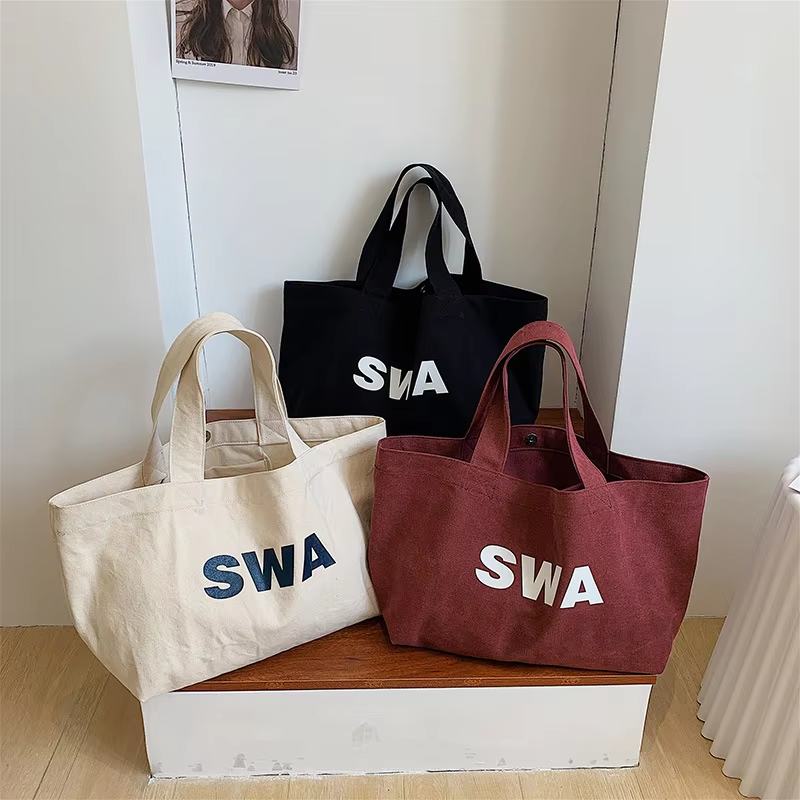
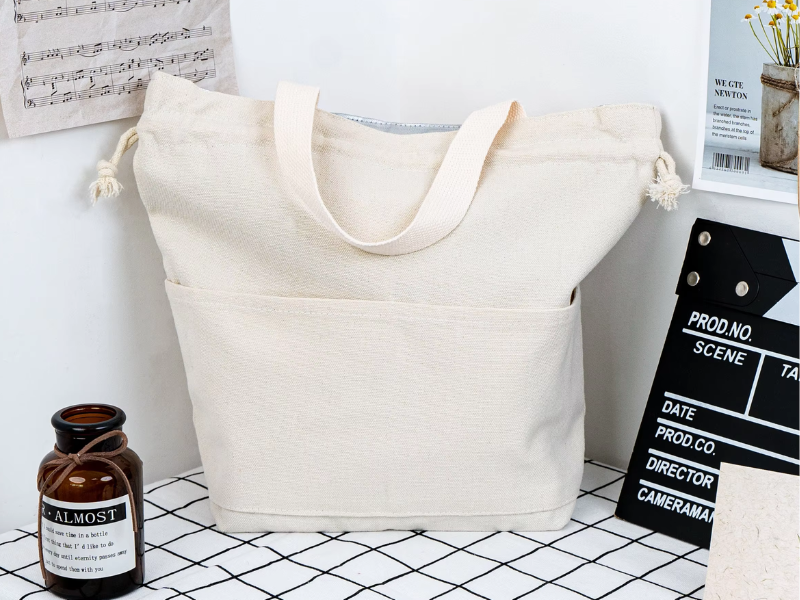
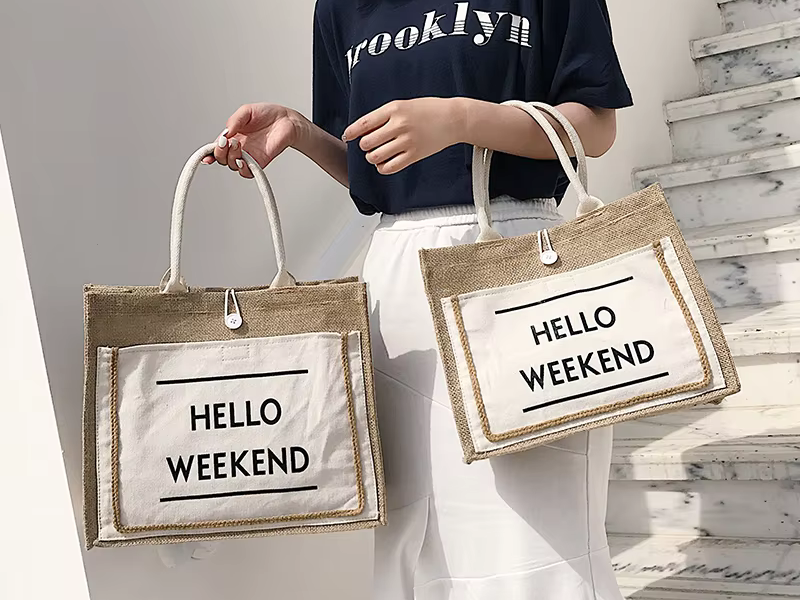
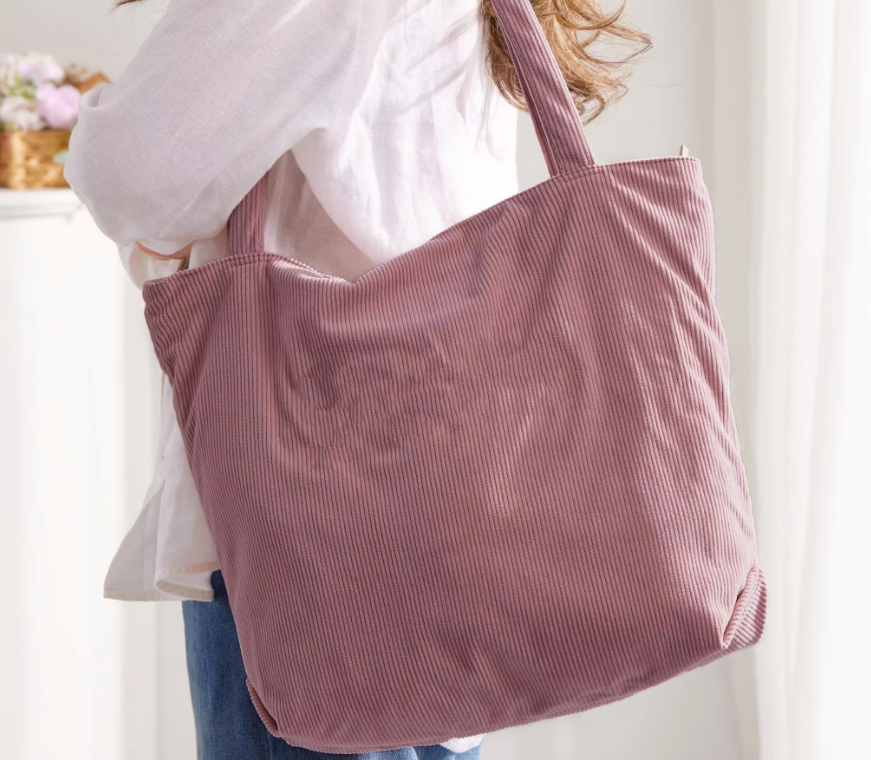
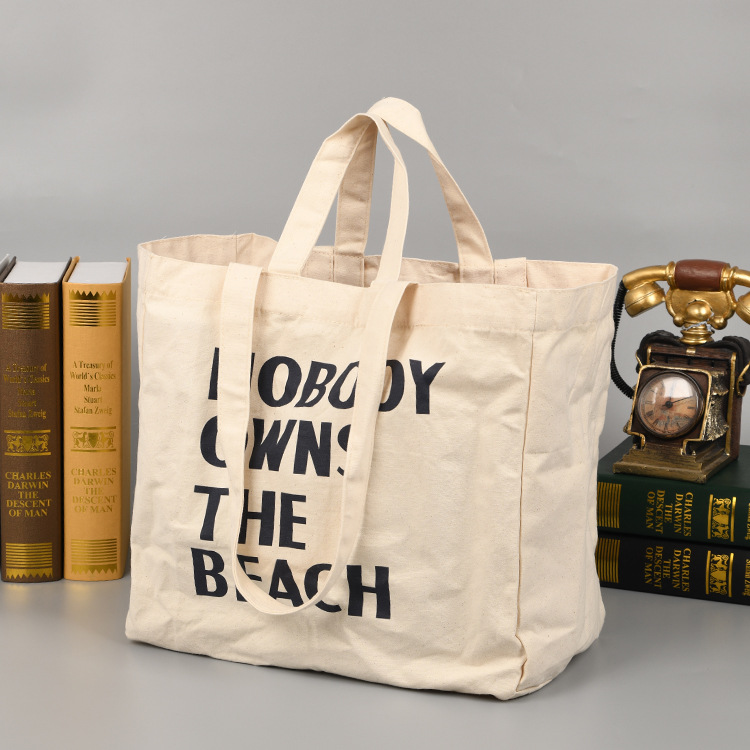
A gusset is the panel that turns a flat sack into a box, and its dimensions — width, depth and how it attaches — decide how much the bag carries, how it hangs on the shoulder and how much fabric the pattern wastes. Most sourcing conversations fix the W and H of a tote and leave the gusset to the factory's default; that is where capacity surprises come from. This guide works through the sizing mathematics step by step: volume from W × H × D, load distribution, handle drop ergonomics, pattern nesting efficiency, and the standard size charts buyers can quote from.
Volume mathematics: how W × H × D defines capacity
The starting equation is simple: usable volume is roughly width × height × depth, with the gusset providing the depth. A 30 × 35 × 10 cm tote computes to 30 × 35 × 10 = 10,500 cm³, or 10.5 litres. Three corrections apply before you quote a capacity claim. First, corners are rounded by seaming, so real usable volume runs about 85–90% of the raw figure — call a 10.5 L bag a 9 L carrier. Second, depth is the single most capacity-efficient dimension: increasing the gusset from 10 to 15 cm adds 50% more volume while increasing fabric cost by far less, because the gusset is a narrow strip. Third, remember the bag is measured flat: a 30 cm wide bag with 10 cm gussets on both sides still folds to a 40 cm wide pattern piece, which is the dimension that matters for cutting.
| Nominal W × H × D (cm) | Raw volume (L) | Usable volume (L) | Typical use |
|---|---|---|---|
| 25 × 30 × 8 | 6.0 | ~5 | Gift, promotional |
| 30 × 35 × 10 | 10.5 | ~9 | Standard retail tote |
| 38 × 42 × 13 | 20.7 | ~18 | Grocery carrier |
| 50 × 55 × 15 | 41.3 | ~36 | Beach / bulk carrier |
Load distribution: why the base gusset matters most
A bag's load is a pressure question. The base panel carries the load's weight, and the base-to-side seams transmit it to the handles through the corners. A wider base spreads the same load over more fabric: 15 kg in a 10 cm-wide base is 1.5 kg per cm of base width before considering length; widen the base to 15 cm and the per-centimetre load drops by a third, which is why grocery totes use deep gussets while gift bags can get away with 6–8 cm. Rule of thumb for spec writing: divide expected load (kg) by base width (cm) and keep the result under 1.5 kg/cm for canvas, tighter for non-woven PP. Handle placement follows the same logic — attachment points should sit over the base corners, not at the centre of the long side, or the bag tilts and spills.
Handle drop length: ergonomics by use case
Drop is the vertical loop of handle above the bag opening, and it dictates how the bag is carried. Too short and the bag jams under the elbow; too long and it drags on the floor when hand-carried. Ergonomic reference bands: hand-carry totes want a 12–18 cm drop so the bag clears the ground at a natural arm length; shoulder-carry wants 25–30 cm so it sits under the shoulder without riding the neck; a drop over 32 cm starts interfering with the chest and reads as a sling. Handle width pairs with drop: 2.5 cm webbing for light promo bags, 3.5–4 cm for retail and grocery carriers, where the wider strap spreads load over the shoulder. For a 30 cm bag height, a 25 cm drop is the practical ceiling before handle-to-handle distance becomes a sewing problem.
| Carry mode | Drop length | Handle width | Load comfort |
|---|---|---|---|
| Hand carry | 12–18 cm | 2.5–3 cm | Up to ~8 kg |
| Forearm / elbow | 18–25 cm | 3–3.5 cm | 8–15 kg |
| Shoulder | 25–30 cm | 3.5–4 cm | 15 kg and up |
Drop is measured from the bag opening to the handle loop's highest point, and assumes the handle is sewn into the seam. An overlay handle stitched on top of the panel adds a few centimetres of effective drop and raises the load point, so the same nominal drop feels different between bags. A deep gusset lowers the centre of gravity: pair a long drop with a deep base and the bag swings when walking and tips forward when set down, so deep-gusset carriers take a shorter drop or a stiffened base.
Pattern nesting and fabric waste
Every dimension decision feeds a cutting calculation, because fabric is bought by the metre and wasted centimetres are pure cost. Standard canvas rolls run 145–150 cm wide, and the pattern layout — how many panels fit across the roll and how the gusset strips nest between them — sets the fabric utilisation rate, typically 75–88% for simple tote patterns. Gussets add waste in two ways: the strip itself and the offcuts between the wider panels. A 30 × 35 cm panel with a 10 cm gusset cuts one piece every 45 cm of roll length; stretch H to 45 cm and the per-piece roll length grows accordingly, so the unit fabric cost scales with the largest dimension, not the average. Practical lever: keep W, H and gusset depth on round numbers (multiples of 5 cm) so panels nest cleanly across the roll width, and avoid odd gusset depths that leave unusable slivers. Boxed-corner construction, where the gusset is formed by sewing a tuck in the panel itself rather than inserting a separate strip, cuts one part from the pattern and reduces waste at the cost of a slightly less crisp base.
Two cutting realities sit behind that utilisation percentage. Seam allowance comes first: every panel carries 1–2 cm of allowance per seamed edge, so a 30 cm panel is cut at 32 cm, and that decides how many pieces fit across a 150 cm roll — four 32 cm cuts fit, five do not. Cutting direction comes second: gusset strips cut on the straight grain are cheapest and most stable, while bias-cut strips flex around curved bases but consume more fabric and raise the lay-up cost, so bias is specified only when the pattern needs the give.
Gusset construction: single-fold, double-fold, boxed corner
Three constructions deliver the same nominal depth with different behaviour. A single-fold gusset inserts one gusset strip between the front and back panels — cheapest, most common, and the fabric fold at the gusset edge is a natural place for print to crack. A double-fold gusset turns the strip back on itself before seaming, adding stiffness and a cleaner edge at slightly higher labour cost. A boxed corner cuts the bag as a single panel and tucks the corners, so there is no separate gusset strip; the base seam runs across the folded corner, which handles loads well but reduces the crisp rectangular opening that retail buyers expect. Specify the construction explicitly — "10 cm gusset" alone does not tell the factory which of the three you want.
Standard size charts to quote from
| Category | W × H × D (cm) | Capacity | Fabric guidance | Handle |
|---|---|---|---|---|
| Gift / promo | 25 × 30 × 8 | ~5 L | 4–6 oz canvas or 80–100 GSM non-woven | 2.5 cm webbing, 15 cm drop |
| Retail standard | 30 × 35 × 10 | ~9 L | 6–8 oz canvas | 3.5 cm webbing, 20 cm drop |
| Grocery | 38 × 42 × 13 | ~18 L | 8–10 oz canvas | 4 cm webbing, 25 cm drop |
| Beach / bulk | 50 × 55 × 15 | ~36 L | 10–12 oz canvas | 4 cm webbing, 30 cm drop |
These are the dimensions most markets accept without reinvention; deviating from them is defensible only when the use case demands it, because non-standard sizes usually mean worse nesting and a small cost step per unit.
Locking the specification with dimensional tolerance
However the dimensions are set, they must survive production. Cotton canvas shrinks 3–5% on first wash, so a spec on pre-washed or sanforized fabric holds ±1 cm dimensional tolerance far more reliably than one on raw greige cloth. Measure the golden sample flat, record W, H, gusset depth and drop length, and check every production lot against it — a bag that drifts 2 cm wider changes the carton fit and the customer's shelf plan. Conlene's development team models capacity, nesting and handle ergonomics for every custom tote it builds, and its 4-stage QC verifies dimensions against the approved sample at each production stage. Browse the standard tote bag range for reference constructions, or send your target capacity and load to the customization service and receive a dimension proposal with fabric consumption calculated per unit. For size charts, carton fit and sampling timelines, contact Conlene and the team will confirm the numbers before the first sample is cut.